Post-Fire and Flood Debris Removal
Do you need support with your recovery from wildfires and floods?
State Disaster Case Managers are a single point of contact to help people affected by wildfires recover. Our services are free and put you and your needs first.
Call our Disaster Case Managers at 505-670-4662.
Things to keep in mind when cleaning out flood debris:
- Prioritize safety. Wear protective gear such as long pants, sturdy shoes, goggles, gloves and masks when handling debris. Stay off damaged structures to prevent any injuries and watch out for snakes or animals.
- Take pictures Documentation will be crucial for insurance claims and any federal assistance that may become available. Take pictures of the damage BEFORE you clean and repair.
- Contact your insurance company early to file a claim.
- Seek professional help. You can request assistance from volunteer organizations or companies who can help with cutting fallen trees, drywall, flooring and appliance removal, tarping roofs and mold mitigation.
- Be cautious around power lines. Never touch, cut, remove or place debris on downed power lines.
- Clean and disinfect everything that got wet. Follow the five basic steps for flood-damaged structures: air out, move out, tear out, clean out and dry out.
- Be aware of hazardous materials and toxic substances. Call your local fire department to inspect or remove chemicals, propane tanks and other hazardous materials. Seal hazardous debris in plastic bags to prevent them from becoming airborne and never burn debris as it can be toxic.
Types of debris and where to dispose of it:
- Burned vegetative and structural debris
- Municipal solid waste: non-hazardous household waste
- Non-hazardous industrial and chemical spill waste
- Asbestos containing or potentially containing debris: any structure built before 1988. Proof of structure’s age may be required.
- Petroleum contaminated or potentially contaminated debris: onsite fuel tanks,
- Visible staining or odor
- Household hazardous waste including items such as cleaners, paints, oils, and pesticides
Residents should contact landfills for special instructions, to check on capacity, make arrangements for payment, etc.
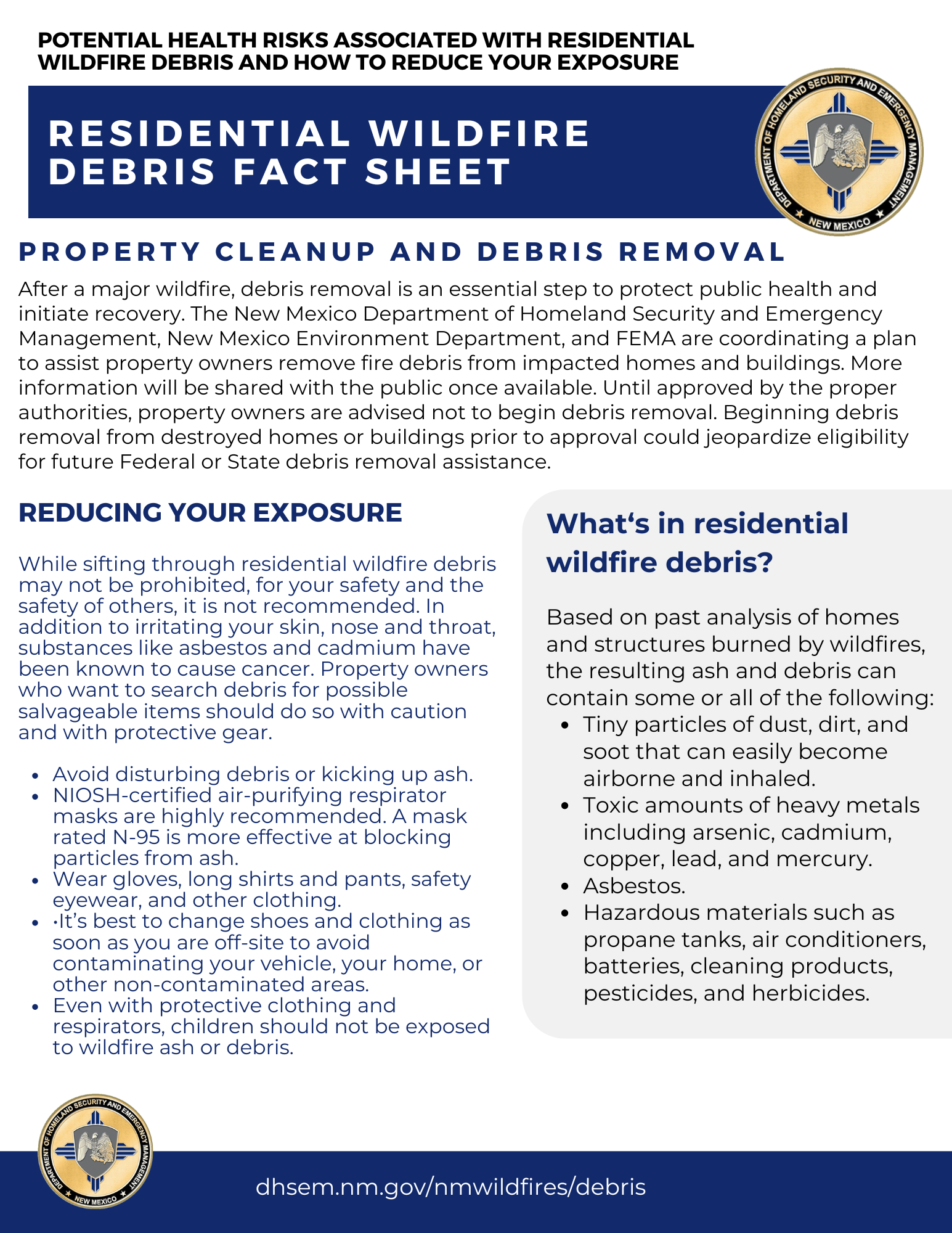
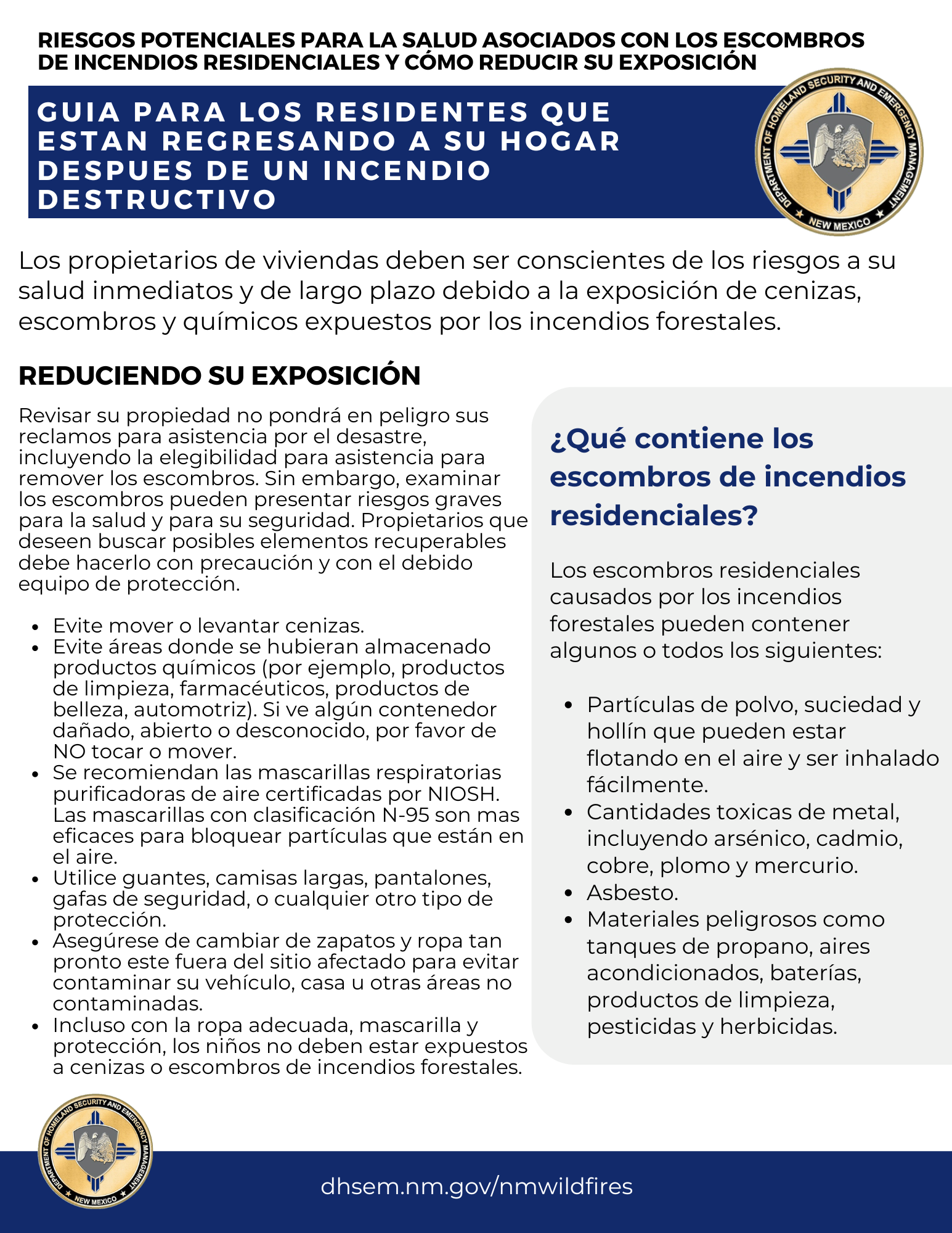
Things to keep in mind when cleaning out wildfire debris:
While sifting through residential wildfire debris may not be prohibited, for your safety and the safety of others, it is not recommended. In addition to irritating your skin, nose and throat, substances like asbestos and cadmium have been known to cause cancer. Property owners who want to search debris for possible salvageable items should do so with caution and with protective gear.
- Avoid disturbing debris or kicking up ash.
- NIOSH-certified air-purifying respirator masks are highly recommended. A mask rated N-95 is more effective at blocking particles from ash.
- Wear gloves, long shirts and pants, safety eyewear, and other clothing.
- It’s best to change shoes and clothing as soon as you are off-site to avoid contaminating your vehicle, your home, or other non-contaminated areas.
- Even with protective clothing and respirators, children should not be exposed to wildfire ash or debris.
What’s in residential wildfire debris?
Based on past analysis of homes and structures burned by wildfires, the resulting ash and debris can contain some or all of the following:
- Tiny particles of dust, dirt, and soot that can easily become airborne and inhaled.
- Toxic amounts of heavy metals including arsenic, cadmium, copper, lead, and mercury.
- Asbestos.
- Hazardous materials such as propane tanks, air conditioners, batteries, cleaning products, pesticides, and herbicides.